Case study · Eastnine AB · Warsaw, Poland
15% less energy.
From an already world-class building.
Warsaw Unit is BREEAM Outstanding, WELL Core v2 Platinum and runs on 100% green power. Exergio still found 15%, roughly €210,000 a year, hidden in its control logic. Zero capex.

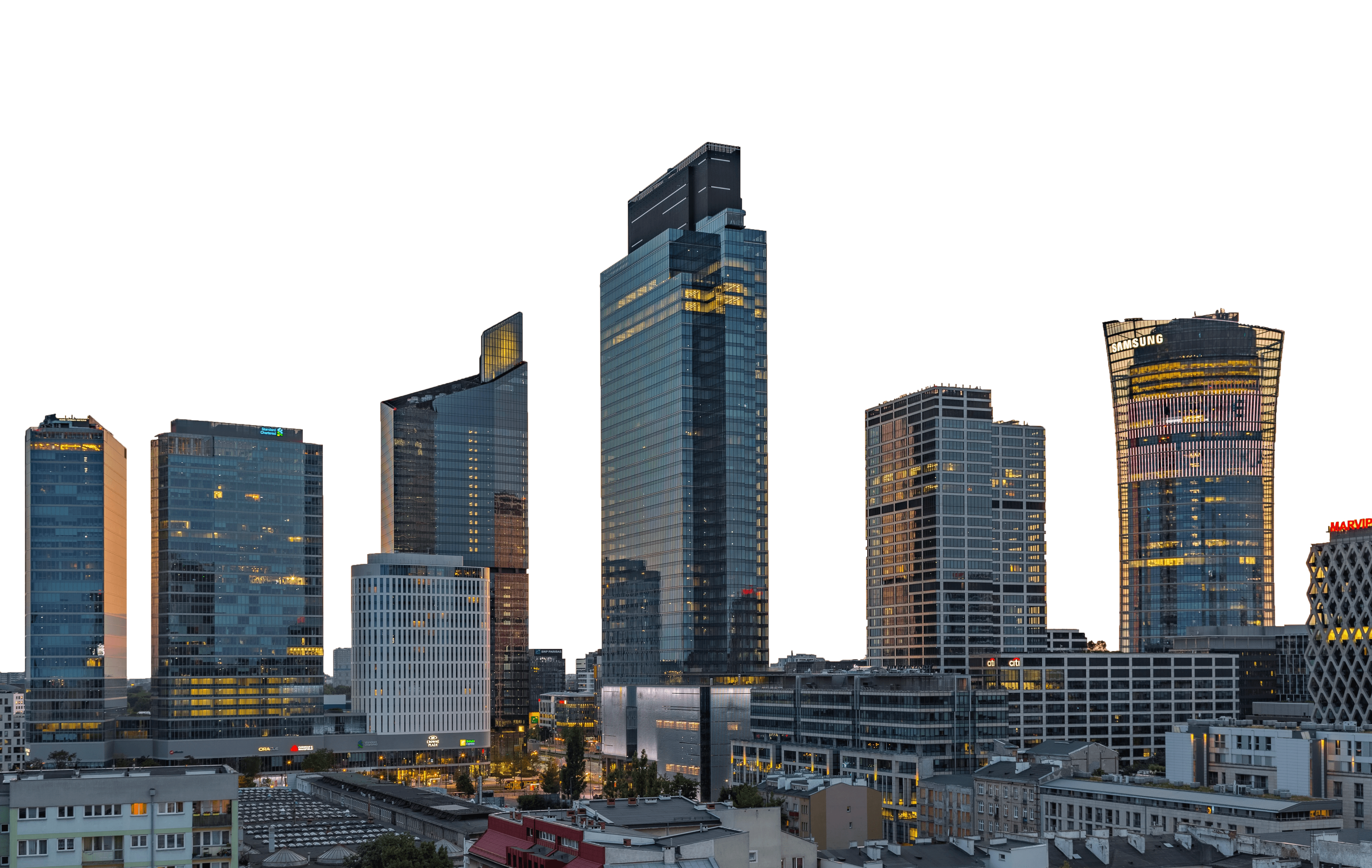
Warsaw Unit · 60,100 m² lettable · 202 m · 46 floors · Rondo Daszyńskiego
15%
Total energy reduction
€210K
Annual cost savings
240 t
CO₂e avoided / year
€0
Capex required
The situation
Best-in-class on paper, yet still tuned by hand
Warsaw Unit is no ordinary building. Completed by Ghelamco in 2021, the 202-metre tower on Rondo Daszyńskiego is one of Europe’s most advanced office addresses: BREEAM Outstanding, WELL Core v2 Platinum, the first in Poland, and the first skyscraper in the country powered entirely by green energy. Its tenants include Warta, Amazon, Stryker, Moderna and CBRE.
That pedigree is exactly what made the question interesting. A building this good runs a sophisticated BMS and a capable engineering team, yet its day-to-day control logic still leaned on fixed schedules and setpoints that don’t re-tune themselves hour by hour. Air-handling units ran to a calendar, not to live occupancy. Heating and cooling occasionally overlapped. Roughly 22,000 live data points streamed past every hour, feeding dashboards but not decisions.
For Eastnine, which acquired the tower in late 2024 in the largest office transaction in Europe that year, even a few points of energy across a €280m asset is material to NOI, ESG reporting and tenant satisfaction. The brief was deliberately hard: prove that software can extract more from an already-green building, with no hardware, no disruption and zero capex.
Project snapshot
Client
Eastnine AB
Asset
Warsaw Unit
Sector
Class-A office
Location
Warsaw, Poland
Size
60,100 m² · 46 floors
Tenants
20+ blue-chip
Engagement
Guaranteed Savings
First savings
6 weeks
M&V
IPMVP Opt. C, HDD-normalised
The client
Eastnine AB
Nasdaq Stockholm-listed real-estate investor · prime CEE & Baltic offices
A Swedish, Nasdaq Stockholm-listed property company investing in modern, sustainable offices in prime Central European and Baltic locations. Eastnine acquired Warsaw Unit from developer Ghelamco in November 2024 for €280 million, the largest single-asset office transaction in Europe that year. For Eastnine, energy performance and green credentials translate directly into asset value and the trust of blue-chip tenants.
The building
Warsaw Unit
46-storey landmark tower · completed 2021
A 60,100 m² lettable tower rising 202 m over Rondo Daszyńskiego, designed by Polsko-Belgijska Pracownia Architektury and known for its shimmering “Dragon Skin” kinetic façade. Behind the glass sits a complex HVAC plant, air-handling units, chillers, district heating and fan-coil zones, wired into a modern BMS with far more headroom than its static schedules were using.
The objectives
Three goals, one hard constraint: don’t touch the hardware
01
Cut energy use
Find real, double-digit savings inside an already-efficient, certified building, funded by the savings themselves, not a capital budget.
02
Activate the dark data
Turn ~22,000 live BMS data points into continuous, calculated optimisation decisions, hour by hour.
03
Protect comfort
Hold, or improve, the indoor climate that underpins WELL Platinum, tenant retention and the building’s green rating.
What was done
Software, supervision and self-learning, layered onto the existing BMS
No rip-and-replace. Exergio connected to the building’s controls and started delivering within weeks.
1
Integrated with the existing BMS
Connected directly to the tower’s controllers with zero hardware retrofit, ingesting ~22,000 data points hour by hour.
Weeks 1–2 · No capex
2
Mapped real demand vs. schedules
Self-learning models exposed exactly where ventilation, heating and cooling ran out of step with real occupancy and weather.
3
Optimised AHUs & setpoints in real time
Airflow and temperature control re-tuned continuously against live comfort conditions across every zone and floor.
4
Applied ML demand-control to chillers
A machine-learning chiller algorithm plus aggressive free-cooling exploitation cut cooling energy with no comfort trade-off.
Chiller energy −22%
5
Re-engineered heating & recovery
District-heating curves and atrium heat-recovery rebalanced; sensor drift and faults flagged automatically for the engineer to action.
A Dedicated Building Engineer
Every algorithm is supervised by a real Exergio engineer who reviews performance, validates each change and tunes the building continuously. This is AI with a human in the loop, not a black box.
The Guaranteed Savings Model
Eastnine paid nothing up front. Exergio’s fee is covered by the savings it delivers, so the project landed on the P&L as a net gain from month one, with downside protection built in.
The result
Energy savings, in numbers
Twelve months after go-live: same building, same tenants, a measurably leaner operation. All figures are weather-normalised against the pre-Exergio baseline year.
15%
Total energy reduction
185 → 158 kWh/m²/yr
−12%
Electricity consumption
6.8 → 6.0 GWh / year
−19%
Heating consumption
4,350 → 3,520 MWh / year
240 t
CO₂e avoided / year
market-based · 720 t on grid average
€210K
Annual cost savings
at contracted electricity + heat tariffs
6 wks
To first measurable savings
from BMS connection
22,000
Live data points analysed
every hour, autonomously
99.4%
Hours within comfort band
EN 16798-1 Cat. II · up from 98.6%
Annual energy use
Baseline year vs. with Exergio · GWh equivalent
11.2
Baseline
9.5
With Exergio
▼ 15% lower energy use
How these numbers were measured
Savings are calculated to IPMVP Option C (whole-facility metering) against a twelve-month pre-Exergio baseline, using the building’s own utility meters for electricity and district heat. Heat is normalised to Warsaw heating-degree-days so a mild winter cannot be mistaken for a saving; electricity is adjusted for occupancy and lettable area, both of which were unchanged over the period. Comfort is measured as the share of occupied hours inside EN 16798-1 Category II (21–25 °C, CO₂ below 900 ppm) across all monitored zones.
Carbon is reported two ways. Warsaw Unit buys 100% renewable electricity, so on a market-based basis the avoided CO₂e comes from district heat alone, ~240 t/year. On a location-based basis, using the Polish grid average, the same saving is worth ~720 t/year. We lead with the lower, market-based figure because that is what Eastnine reports.
Ventilation & Heating
AHU airflow & temperature tuned to live occupancy
District-heating curve optimised against weather forecast
Atrium heat-recovery rebalanced across zones
Automatic detection of sensor drift & faults
Per-floor airflow balanced to real fresh-air need
Cooling
ML demand-control algorithm for chiller operation
Free-cooling exploited whenever conditions allow
Chiller energy cut by ~22% with no comfort trade-off
Chiller staging matched to true building demand
Continuous benchmarking flags any drift in real time
The outcome
A leaner, greener, more valuable asset, paid for by itself
In twelve months, Warsaw Unit went from a certified, well-run building to a continuously optimised one. The same physical asset now consumes 15% less energy, avoids ~240 tonnes of CO₂e a year, and holds comfort tighter than before, without a single new component or a euro of capital expenditure.
Because the engagement runs on the Guaranteed Savings Model, every result above is net-positive on Eastnine’s P&L. And because it builds on best-in-class certifications rather than working against them, Warsaw Unit is now measurably ahead of tightening EU EPBD and ESG requirements.
Eastnine has worked with Exergio since 2022, starting at Nowy Rynek in Poznań.
15% energy & ~€210K saved / year
Achieved purely through smarter operation of existing systems.
Zero capex, positive from month one
The Guaranteed Savings Model removes the investment risk entirely.
Comfort improved, not traded
99.4% of hours inside the target comfort band.
Higher asset value & ESG standing
Lower running costs and carbon strengthen NOI and certification.
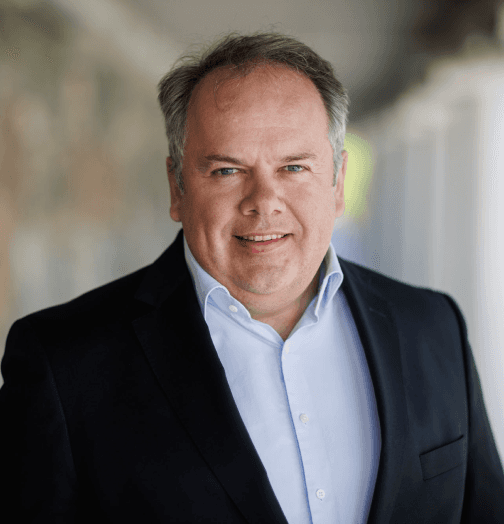
Kęstutis Sasnauskas
CEO & Founder · Eastnine AB
More verified results
Swedbank, Technopolis, Four Seasons and NEPI Rockcastle, measured the same way.